

Web Presence: Keeping Your Business Information Consistent
Review website versions, redirects and campaign links so visitors reach a consistent address and the right page for your business.
Review website versions, redirects and campaign links so visitors reach a consistent address and the right page for your business.

Search Console and Google Analytics: how to compare SEO data, investigate differences between clicks and sessions and review content with evidence from the site itself.

Segmenting a campaign means deciding who needs each message and why. Review your data, selection criteria, exclusions and follow-up process before scheduling.

AI in marketing: defines a task, tests actual authorized cases and checks errors, liability and boundaries before connecting a pilot with customers.

A market guide should help make a decision. Check client questions, evidence and examples to develop useful content without inventing.

Digital payments: how to integrate checkout, distinguish collection responses and try orders with documentation from Shopify and Strip before you launch the store.

Lo-Fi content: how to compare authenticity and brand production, define tests with the same audience and measure responses before an extension of a campaign.
Read more
Health site: Check fields, errors and form confirmation to distinguish an application received from an appointment accepted by the office.
Read more
Learn how to check a page’s crawlability, indexing, content and technical signals, and document findings without promising search rankings.
Read more
A form needs clear questions and a path that can be completed. Check fields, labels, keyboard and error messages to detect barriers.
Read more
Social networks serve to distribute care. The website serves to preserve, organize, connect and convert content that really represents your business.
Read more
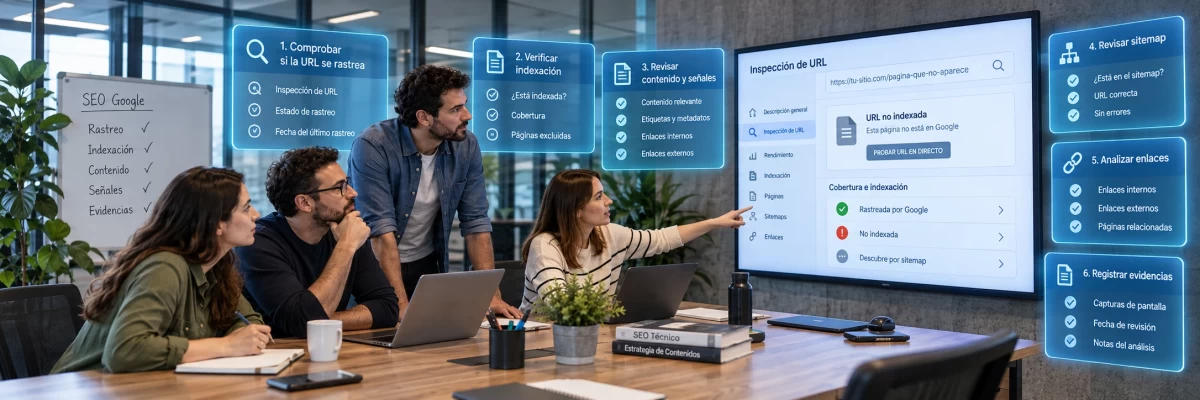
Learn how to check a page’s crawlability, indexing, content and technical signals, and document findings without promising search rankings.
Read more
Health site: Check fields, errors and form confirmation to distinguish an application received from an appointment accepted by the office.
Read more
Lo-Fi content: how to compare authenticity and brand production, define tests with the same audience and measure responses before an extension of a campaign.
Read more
Digital payments: how to integrate checkout, distinguish collection responses and try orders with documentation from Shopify and Strip before you launch the store.
Read more
A market guide should help make a decision. Check client questions, evidence and examples to develop useful content without inventing.
Read more
AI in marketing: defines a task, tests actual authorized cases and checks errors, liability and boundaries before connecting a pilot with customers.
Read more
Segmenting a campaign means deciding who needs each message and why. Review your data, selection criteria, exclusions and follow-up process before scheduling.
Read more
Search Console and Google Analytics: how to compare SEO data, investigate differences between clicks and sessions and review content with evidence from the site itself.
Read more
Review website versions, redirects and campaign links so visitors reach a consistent address and the right page for your business.
Read more
A form needs clear questions and a path that can be completed. Check fields, labels, keyboard and error messages to detect barriers.
Read more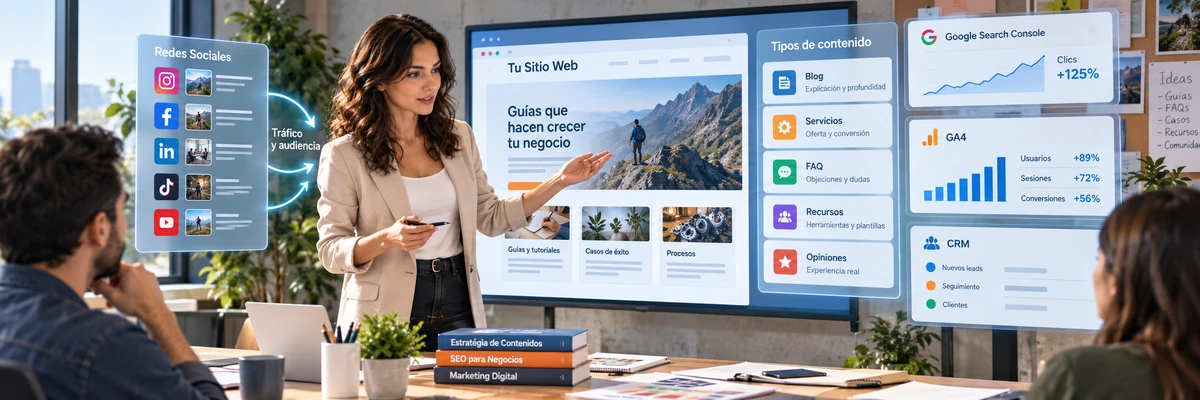
Social networks serve to distribute care. The website serves to preserve, organize, connect and convert content that really represents your business.
Read more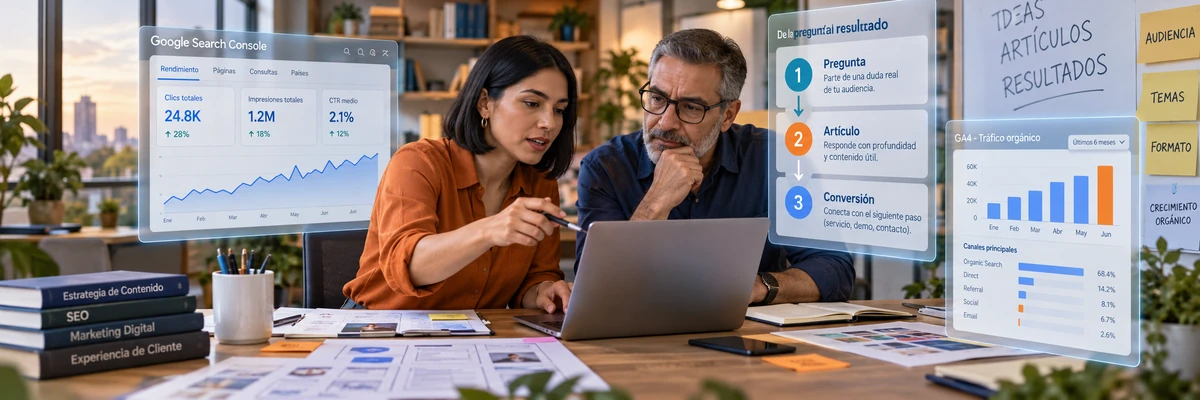
A blog doesn't work because "you have to publish." It works when you answer real questions, create found pages and build internal routes to services and decisions.
Read more
Reusing does not mean copying and gluing. It means taking an idea that has already shown interest and turning it into a more complete, found and connected piece.
Read more
The frequency doesn't make up for a lack of usefulness. Before you publish, you have to answer what problem you solve, what you bring and why someone should save it, link it or share it.
Read more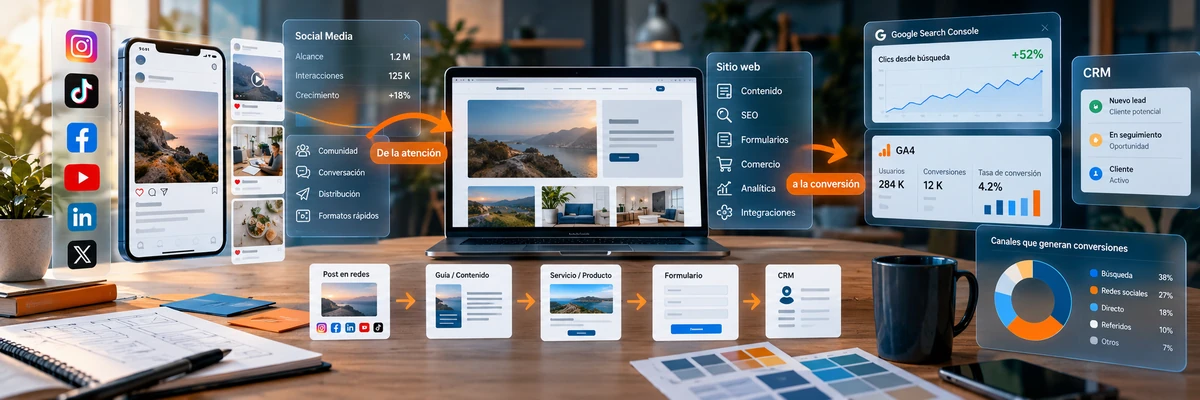
They are no substitutes. Networks can distribute care and conversation and the site can concentrate context, search, conversion, analytics and own data.
Read more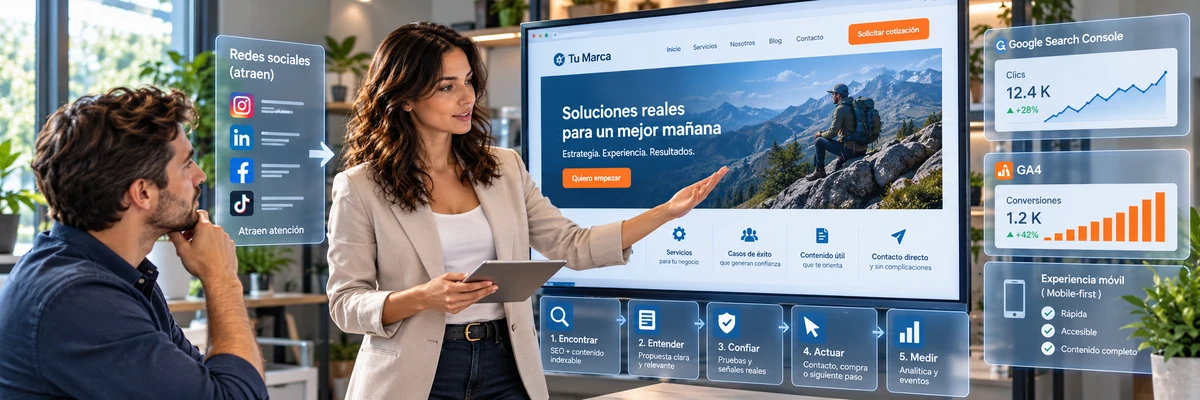
A useful website isn't just about who you are. It should help you to be found, explain your proposal, turn interest into an action and give you information to improve.
Read more
The home doesn't have to say anything about it: it needs to get a quick direction, show relevance and open clear paths to information and action.
Read more
The aesthetics can attract and architecture, usability and clarity decide if that care becomes a useful experience.
Read more
There is no universal expiry date. A redesign is better justifiable by measurable signs than by the age of the site.
Read more
Ten common faults that add friction: from a confusing proposal to problems with mobile, contrast, performance and forms.
Read more
Hierarchy, consistency, space, typography and images can elevate perception without filling an effect screen.
Read more
The architecture should be responsive to what the visitor needs to find and what his or her business needs to achieve.
Read more
A mobile site needs priorities, comfortable controls, legible text and an experience designed for small screens.
Read more
The design can guide reading without filling up the interface of challenges, colors and attention calls.
Read more
A template can accelerate a project and a custom system can better solve specific needs.
Read more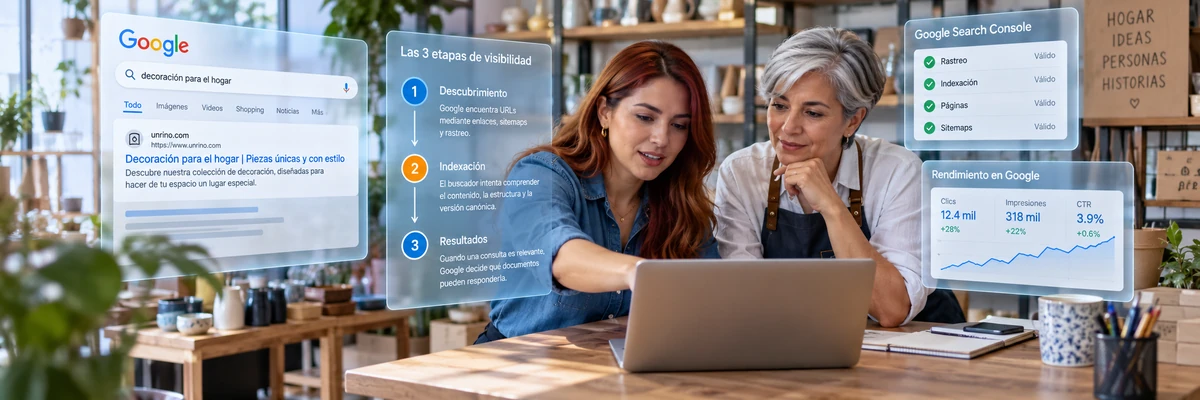
SEO isn't "cheating Google." It's working structure, content, experience and technical signs so that search engines better understand a website and the right people can find it.
Read more
To publish a page only means that it exists online. To appear on Google you have to be able to be found, traced, indexed and considered relevant to some search.
Read more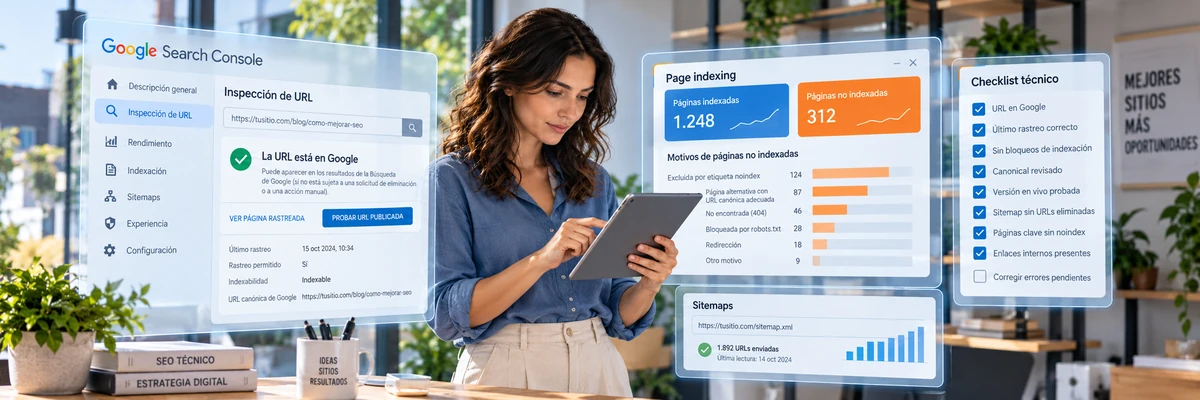
Do not guess if Google knows a page. Search Console allows you to inspect URLs, review coverage, detect blockages and check what version Google understands.
Read more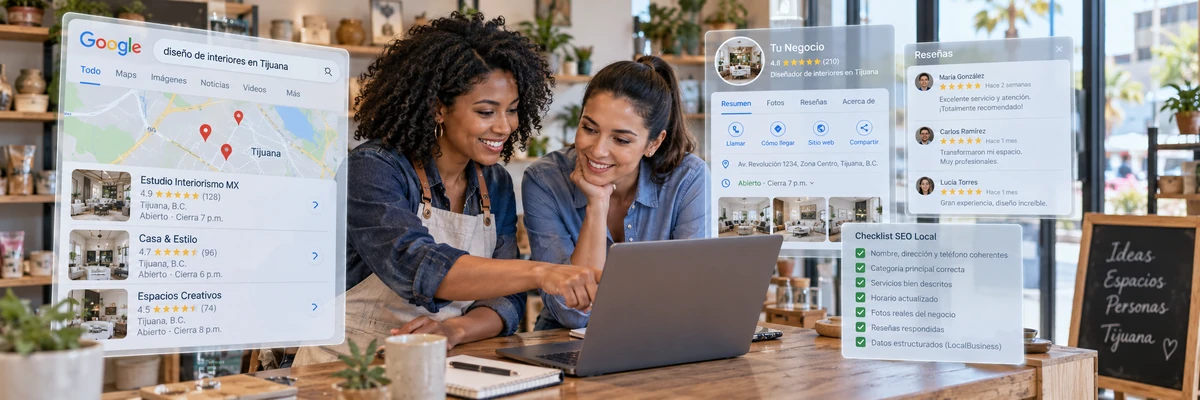
For local searches, the Google Company's site and Profile have to tell the same story: what you do, where you operate, how to contact and why you are an important choice.
Read more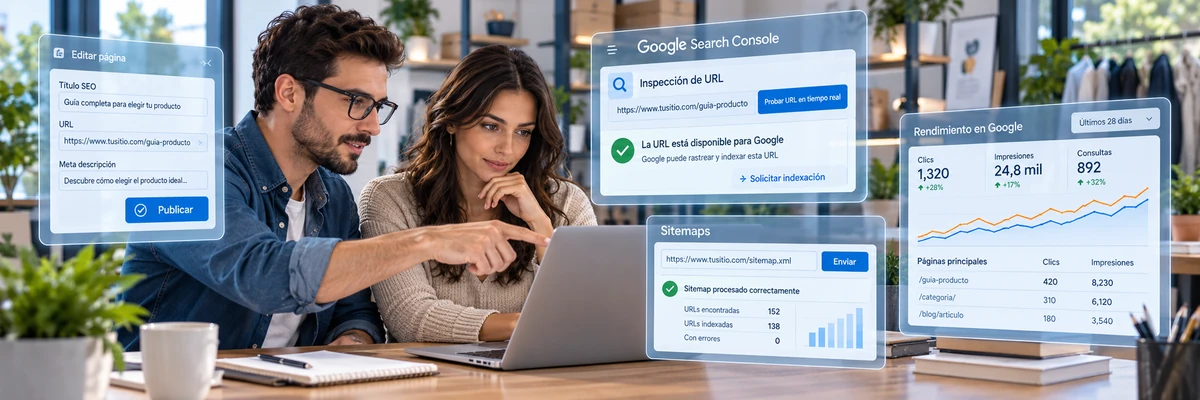
To publish is the start. Then you have to check indexability, link the page, update sitemap and use Search Console as it makes sense.
Read more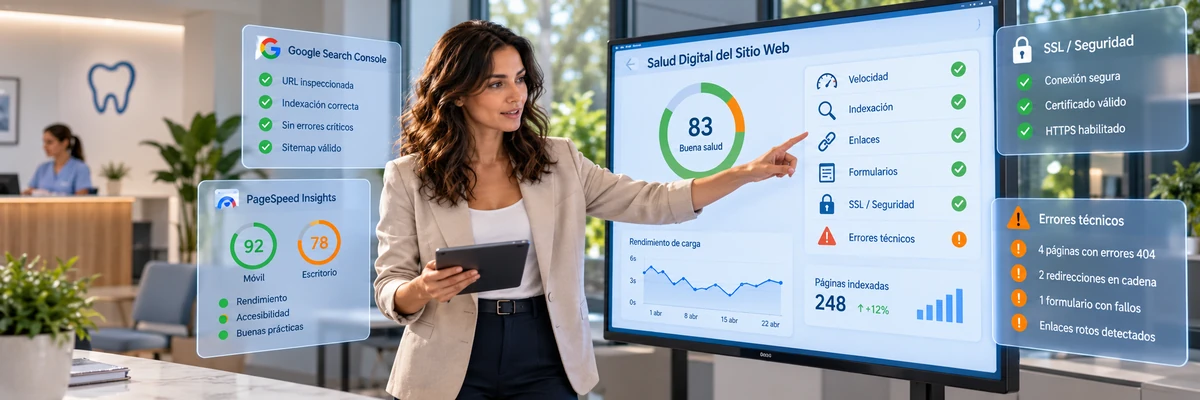
Speed, links, indexation, forms, SSL and technical errors offer a more useful reading to check only if "open."
Read more
Small errors accumulate: slow pages, broken links, failed forms, obsolete plugins and outdated content.
Read more
A website may be technically healthy and still lose its usefulness if prices, services, schedules or information are no longer correct.
Read more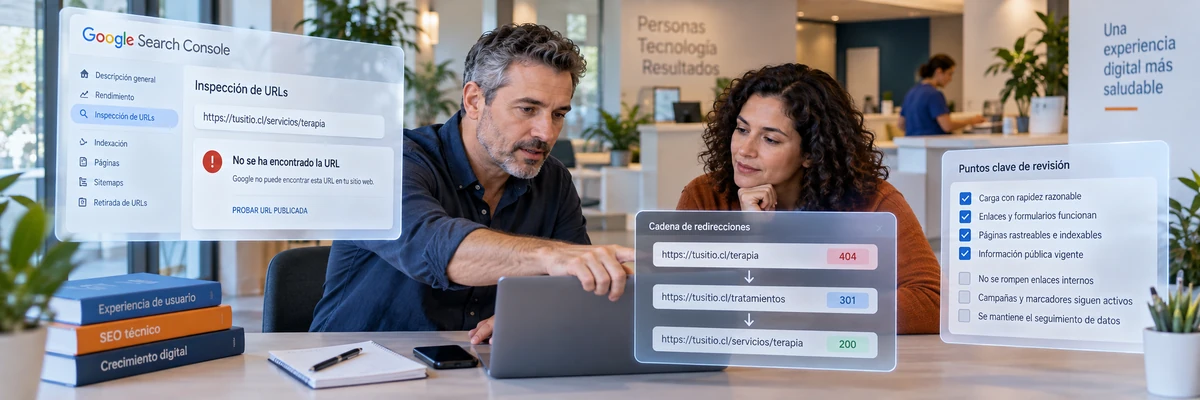
The URLs changes require monitoring to avoid breaking internal links, campaigns, markers or indexation signals.
Read more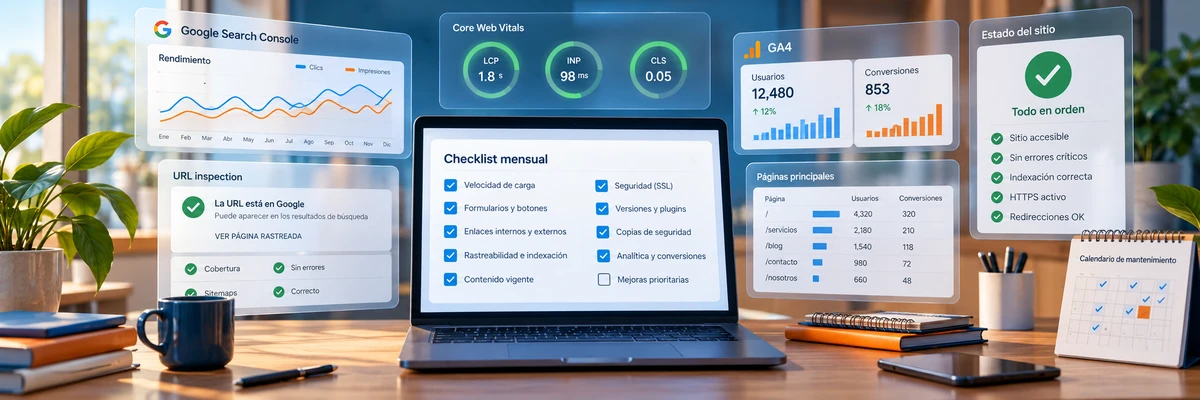
A brief and recurrent review may detect problems before they affect conversions, reputation or visibility.
Read more
Product, confidence, payments, logistics, monitoring and measurement have to work together.
Read more
The integrations can quote, generate guides, notify the client and reduce manual work after each purchase.
Read more
For some businesses, delivering quickly into the city can be as important a commercial advantage as price.
Read more
Reminds, confidence, sending costs and friction at Checkout can recover sales without giving away an unnecessary margin.
Read more
The proper automation prevents double catches and helps sales, existence and monitoring share the same information.
Read more
Before buying traffic it's best to check if the page can turn that care into a measurable action.
Read more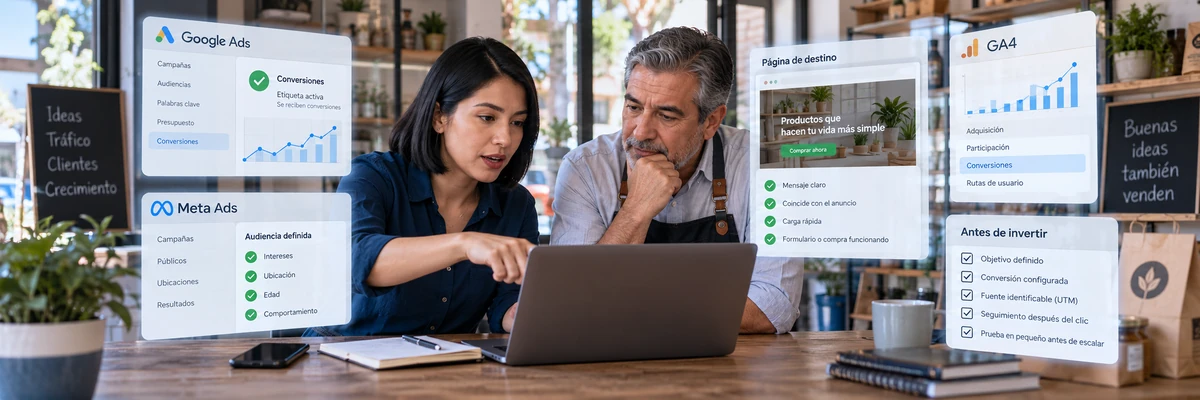
Objectives, measurement, destination and monitoring should exist before budget escalation.
Read more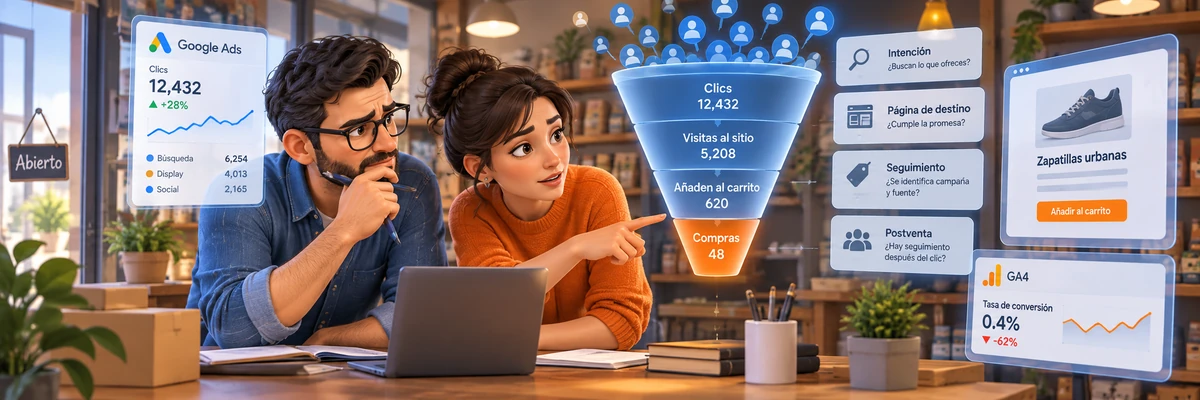
The problem may be about intention, offer, the experience of the page or subsequent monitoring.
Read more
UTMs, analytics, CRM and basic attribution allow to distinguish perception of evidence.
Read more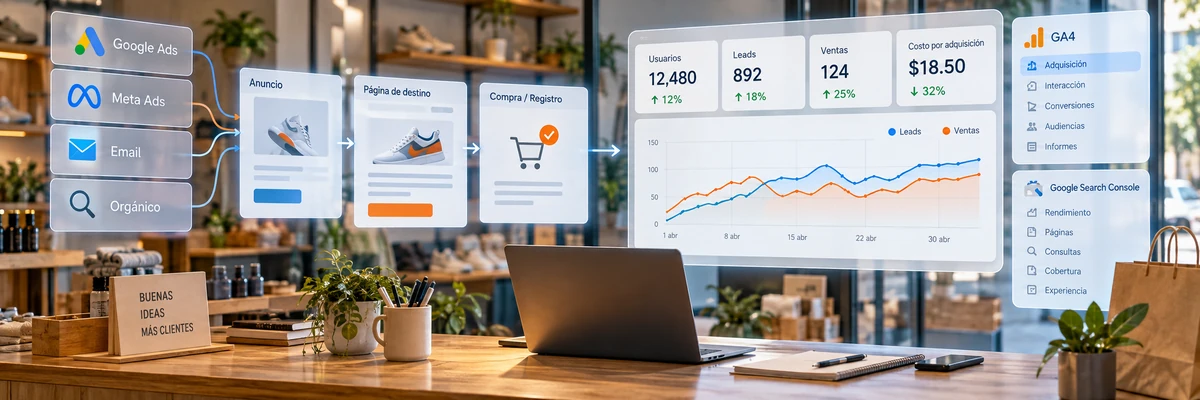
A small set of useful metrics can guide decisions better than a board filled with numbers.
Read more
The best entry is usually a concrete, measurable and repetitive task, and not a complete transformation at a blow.
Read more
Automation works best with boundaries, clear data and a review path.
Read more
A CRM helps with contacts, monitoring and opportunities that are no longer reliable in memory and free messages.
Read more
Automate reminders and signalling doesn't mean automate all conversations.
Read more
The actual conversion depends on how quickly and tidingly you capture, classify and attend to that contact.
Read more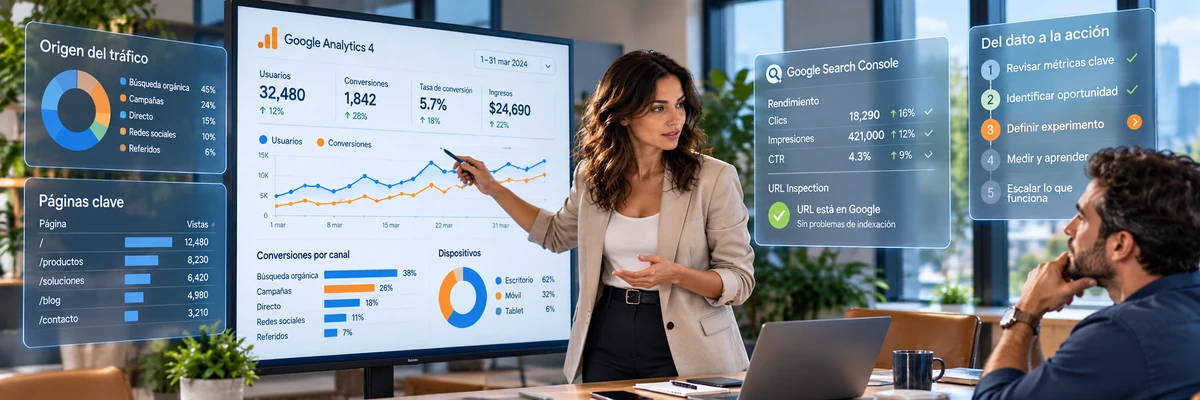
Traffic, conversion, origin, key pages and lead quality can tell a more useful story than hundreds of numbers.
Read more
A small board can answer from where the visits come from, what they do and what actions generate value.
Read more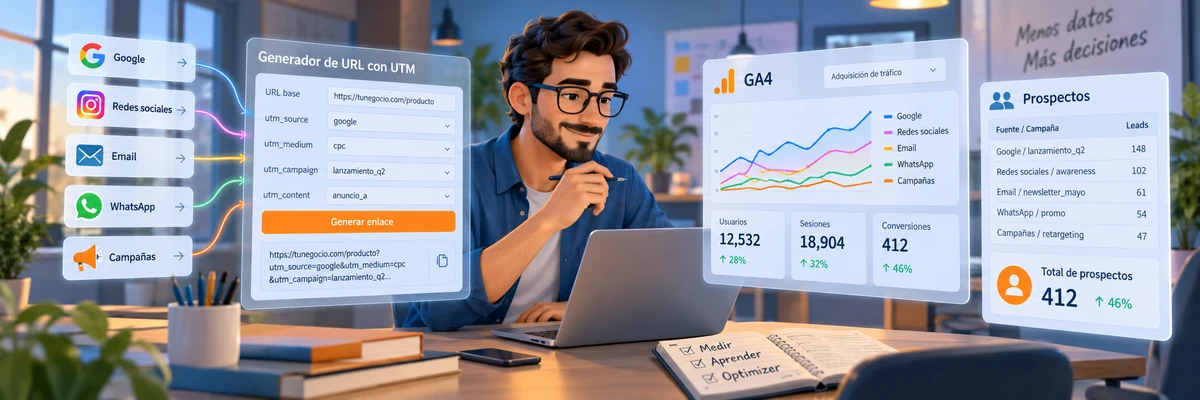
Label links helps to distinguish Google, networks, email, WhatsApp and specific campaigns.
Read more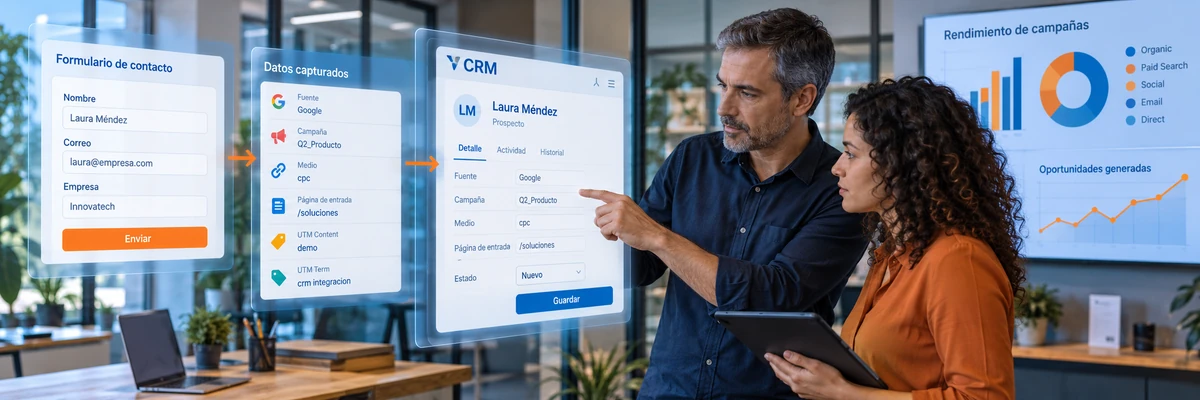
Capturing source, campaign and entry page allows better monitoring and measuring what creates opportunities.
Read more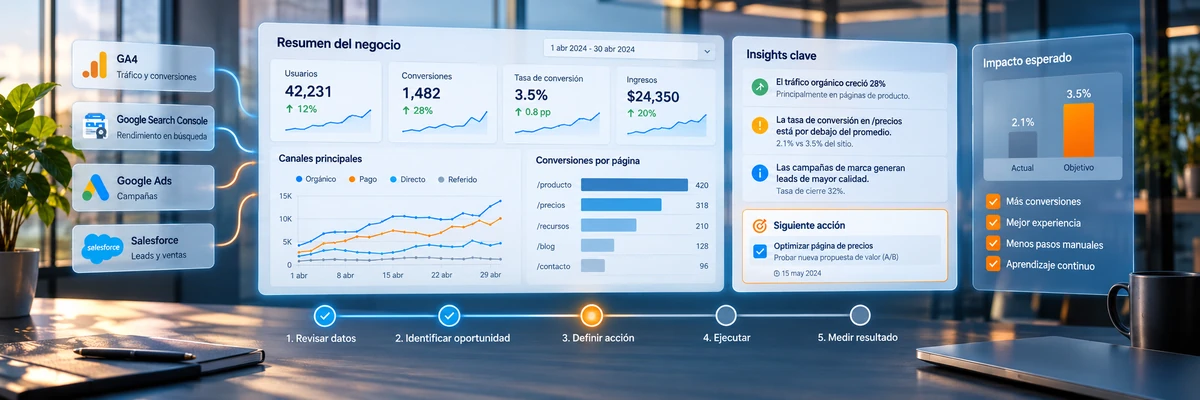
The data are useful when an action is activated: to correct a page, to call a lead, to move a budget or to prove a hypothesis.
Read more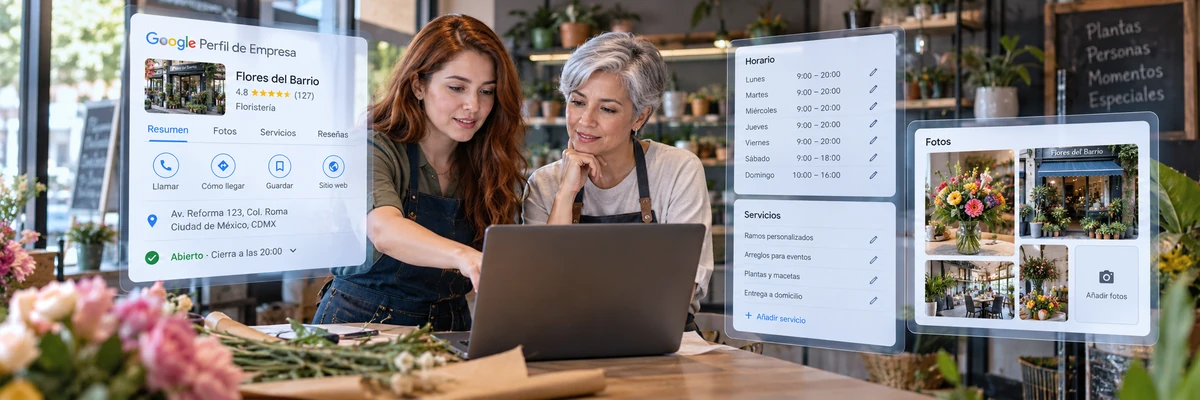
Category, address, schedule, services, photos and consistent data form the basis of a reliable local presence.
Read more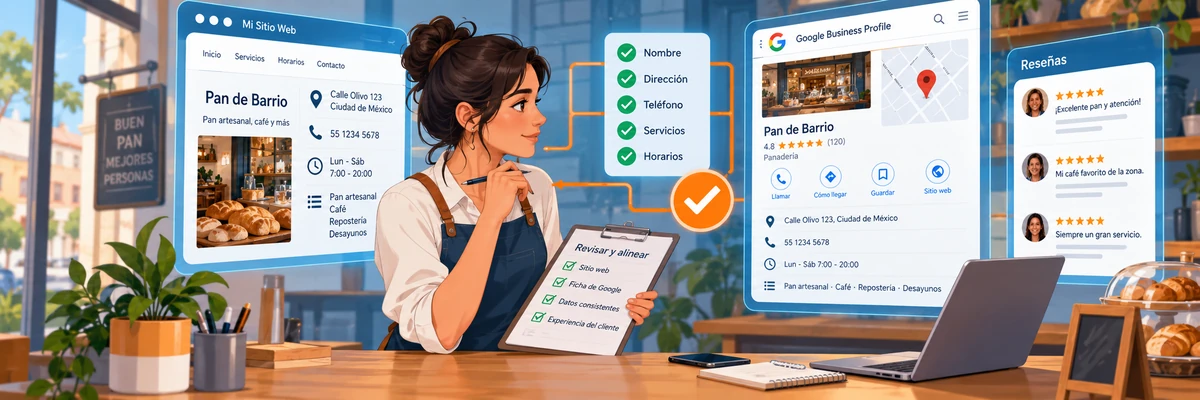
Name, location, phone, services and inconsistent schedules create confusion for customers and search systems.
Read more
A good review practice should facilitate the process without pressuring or making opinions.
Read more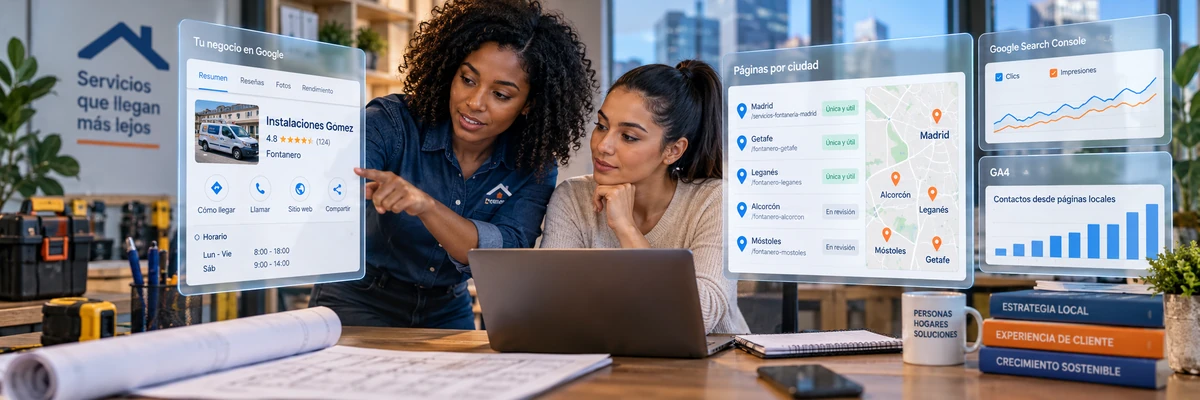
A local page needs information that's really useful for that area, not just changing the name of the town.
Read more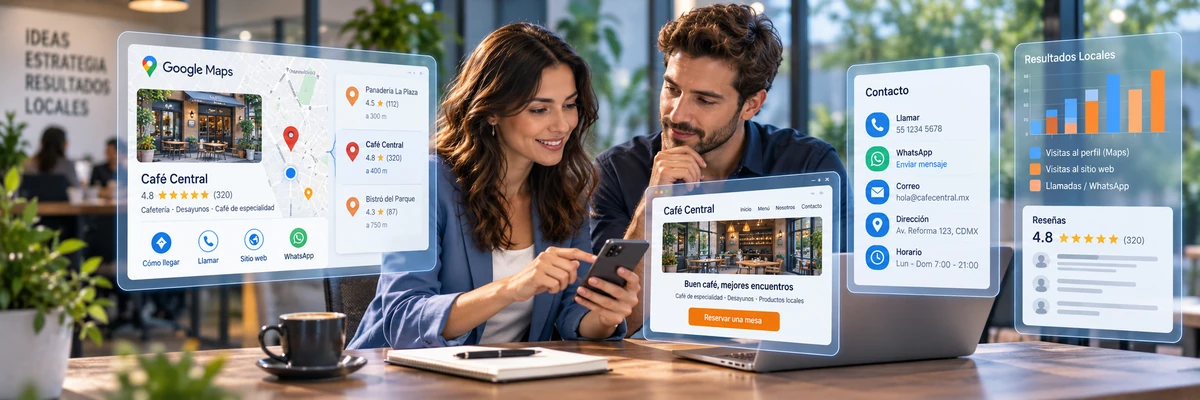
Local experience improves when map, information, call, WhatsApp and site are connected without friction.
Read moreWe found no articles with that search.